If you are choosing the right type of roofing for your home, there are basically two main options that often come up. These options are metal shingles (also known as stamped metal roofing) and the other is standing seam metal roofing. In this blog, we will explore both options in detail, highlighting their features, similarities, performance, installation types, materials, and everything in between — everything possible.
Meet the Experts
In this session, recorded in Piqua, Ohio, Todd Miller and Adam Mazella dive into a head-to-head comparison of stamped metal shingles and standing seam roofing. Their insights come from years of hands-on experience with metal roofing systems across various environments and building types.
Key Similarities Between Metal Shingles and Standing Seam
First, let’s look at the similarities between both panels. Okay, there are similarities and differences in appearance, feel, price, and many other things. These two systems also have many similarities, so we will discuss everything in detail.
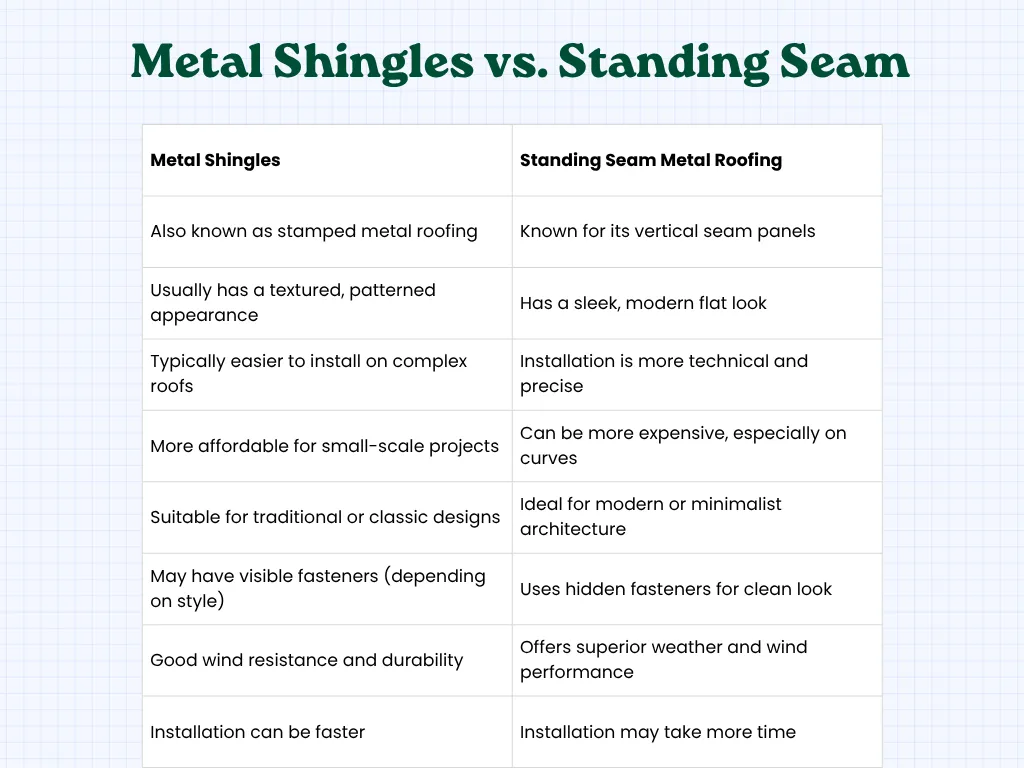
| Metal Shingles | Standing Seam Metal Roofing |
|---|---|
| Also known as stamped metal roofing | Known for its vertical seam panels |
| Usually has a textured, patterned appearance | Has a sleek, modern flat look |
| Typically easier to install on complex roofs | Installation is more technical and precise |
| More affordable for small-scale projects | Can be more expensive, especially on curves |
| Suitable for traditional or classic designs | Ideal for modern or minimalist architecture |
| May have visible fasteners (depending on style) | Uses hidden fasteners for clean look |
| Good wind resistance and durability | Offers superior weather and wind performance |
| Installation can be faster | Installation may take more time |
1. Material Options
Both roofing types are available in aluminum and steel, with exotic metals like copper and zinc also used. This provides versatility in durability and appearance.
2. Protective Coatings
They typically use high-quality PVDF (polyvinylidene fluoride) coatings, ensuring long-term protection and color retention.
3. Concealed Fasteners
Both systems employ hidden fasteners to eliminate exposed screws, which enhances the aesthetics and reduces the risk of water infiltration.
4. Flashing Techniques
Flashing components—such as valley flashings, drip edges, and Z-flashings—are often similar between the two. The difference lies in how these are adapted to specific profiles, especially with stamped shingles.
5. Uplift Performance Testing
Both systems undergo UL90 uplift resistance testing and UL 1897 failure tests, ensuring performance in high-wind zones.
Installation Similarities and Flashing Details
Most flashings used in metal shingle and standing seam systems are linear and designed for performance and appearance. However, metal shingles offer profile-specific flashing options that can create the appearance of natural materials like slate or shake.
A major benefit of metal shingles is their ability to handle flared gables and complex edges through custom gable channels—offering visual continuity and superior water runoff.
Major Differences Between Metal Shingles and Standing Seam
Now let’s look at where these systems diverge:
1. Handling Pipe Penetrations
- Standing seam roofs often use flush-mounted or deck-mounted pipe flashings.
- Metal shingles, on the other hand, allow easier handling of pipe penetrations due to their horizontal layout, much like asphalt shingles.
2. Installation Preferences
Installers tend to prefer the system they learned first. Time and labor efforts for both are quite comparable, but both systems require skilled craftsmanship, especially in bending and flashing.
Differences in Metal Thickness and Strength
1. Metal Gauge
- Standing seam roofs use thicker metal:
- Aluminum: 0.032″ to 0.040″
- Steel: 24 gauge
- Stamped metal shingles use thinner metals:
- Aluminum: 0.019″ to 0.024″
- Steel: around 15–16 thousandths
Despite being thinner, stamped shingles gain rigidity through shape and texture, often reinforced with foam inserts for added walkability.
Flashing Flexibility and Pitch Requirements
1. Pitch Flexibility
- Stamped metal shingles generally require a minimum 3:12 roof pitch.
- Standing seam (especially mechanically seamed) systems can go much lower, even down to 0.5:12, depending on system type and environment.
2. Flashing and Fabrication
- Stamped metal shingles often use generic-pitch flashings and can be field-customized using a portable handbrake.
- Standing seam requires pitch-specific flashings due to the difficulty of bending thicker metals.
Decking and Re-Roofing Options
1. Deck Types
Both systems are tested on ½” nominal plywood or OSB. However, in re-roofing situations, metal shingles are favored.
2. Going Over Old Shingles
- The lightweight and raised profile of stamped metal shingles allows installation directly over old asphalt shingles.
- Their form creates an air gap that hides imperfections like cupping or cracking in old shingles.
This can result in savings on tear-off costs and even visually fix uneven roof areas, such as swales, without major deck repair.
Aesthetic Considerations
- Standing seam roofing offers a modern, linear appearance with tall, continuous seams.
- Metal shingles can mimic the look of slate, shake, or tile, making them ideal for historical or residential designs.
Conclusion
Both metal shingles and standing seam metal roofing provide excellent protection, durability, weather performance, wind resistance, and curb appeal. But the final decision is completely up to you — what you like the most. If you prefer standing seam metal roofing, then go for it if it fits your budget. Or if you like simple metal shingles, go for them too. It all depends on your budget, needs, and personal choice.
- Desired aesthetics
- Roof pitch
- Deck condition
- Installation preferences
- Budget
If you want the sleek modern lines of a contemporary home, standing seam may be your choice. But if you love the charm of wood shake or slate without the maintenance, metal shingles are worth considering.
For more insights, subscribe to The Metal Roofing Channel, and be sure to check out our other videos featuring Todd Miller and Adam Mazella.