
Spray polyurethane foam aka SPF is a material that’s made by combining two liquids a resin and an isocyanate as it sprayed onto the existing roof substrate it creates a foam that expands 20 times in size to form a seamless foam roof surface when the foam is expanded this layer can be between 1 & 1 & a half inches in thickness when the installation is complete it will create a durable renewable foam roof covering SPF roofing is not the most well known type of roofing material the technology has been around since the 1960s for industrial commercial and residential facilities
Okay, now we’ll discuss the most commonly asked questions related to spray foam roofing and the things you must know about spray foam coating. So, let’s deep dive into it.
1-What is spray foam roofing and how does it work?
Spray foam roofing, also known as pre-polyurethane foam roofing, is a simple and energy-efficient roofing system that is applied directly to the existing roof surface. It involves the process of spraying a liquid mixture that expands into a solid layer to form a foam insulation. These materials create a durable and waterproof barrier against the external environment. This system is especially popular for flat and low-slope roofs and is most commonly used in commercial buildings due to its excellent insulation properties and energy-saving nature.
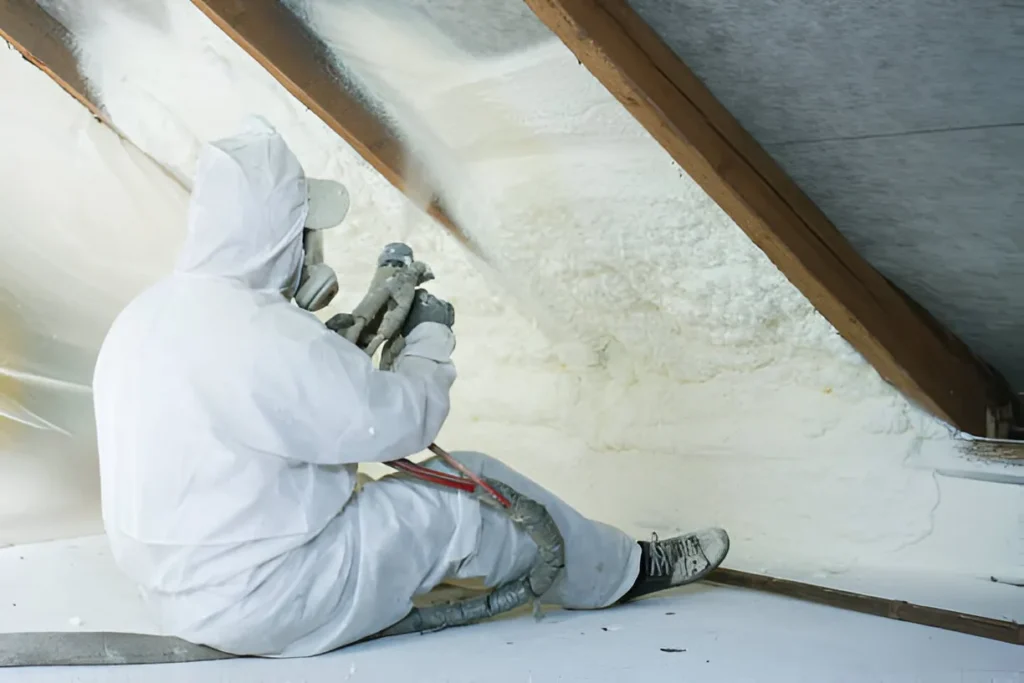
Once applied, the spray foam roof insulation helps reduce energy costs by minimizing heat transfer. It also fills gaps and seals cracks, preventing leaks. A protective roof coating is typically added on top to shield the foam spray roofing from UV rays and weather damage. Whether it’s for a metal roof, a residential building, or a commercial property, spray foam roofing systems offer long-term performance with minimal maintenance.
This roofing system is really amazing, and it is versatile enough to be used on different surfaces, including spray foam insulation or metal roofs. It is among the top choices for those looking to upgrade their aura spray insulation or improve their roofing insulation overall. It offers a complete and overall solution for all types of roofing surfaces.
2-Can you install spray foam on metal or tin roofs, and does it stick properly?
Now the next question is: Can you install spray foam on metal too, especially if it’s thin or loose, and does it stick properly?
Yes, spray foam insulation can be successfully installed on metal roofs or metal structures, and it adheres very well if applied correctly. In fact, spray foam on metal roofs is one of the most popular and widely used choices for both commercial and residential buildings, because it provides excellent adhesion and insulation capabilities.
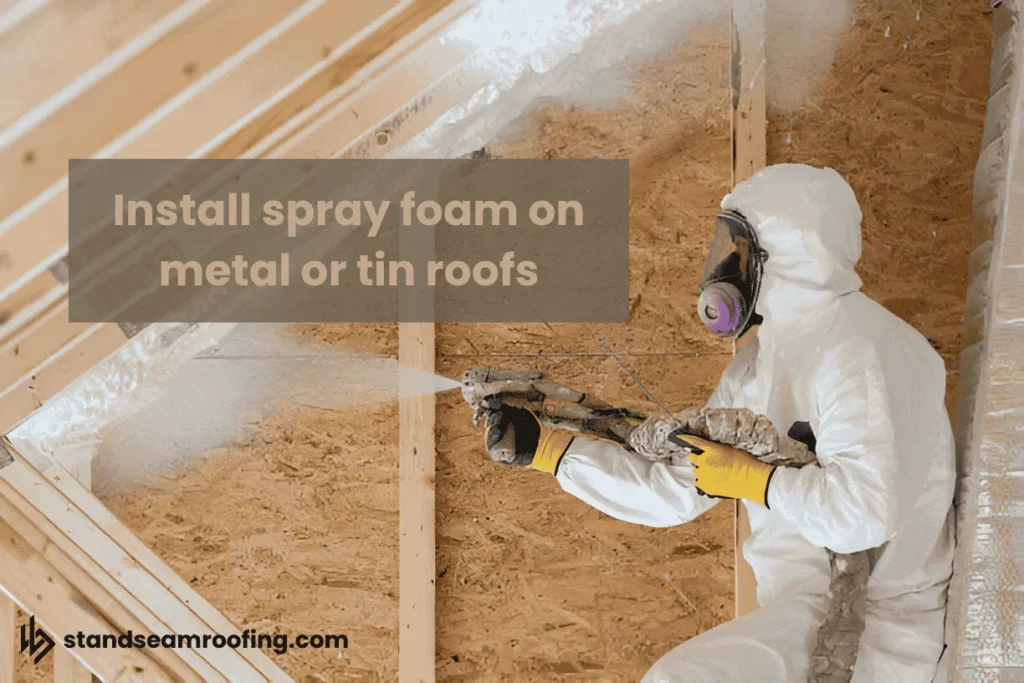
The spray polyurethane foam (SPF) roofing creates a seamless layer that bonds directly to the metal surface, filling gaps and preventing air or water leaks.
Many contractors prefer using closed-cell spray foam roofing because it not only sticks properly, but also strengthens the structure, reduces noise, and resists moisture. It’s ideal for metal buildings that experience temperature swings, making it a reliable option for energy efficiency and weather protection.
Whether you’re considering spray foam insulation roofing for a barn, warehouse, or home, it’s important to hire experienced spray foam roofing contractors to ensure the best results. When applied professionally, spray foam for metal roofs becomes a durable and long-lasting solution.
3-Can you spray foam the underside of your roof or roof rafters?
Yes, you can spray foam the underside of your roof or directly onto the roof rafters, and it’s actually one of the most common methods for improving the energy efficiency of a home. Applying spray foam insulation below the roof creates a thermal barrier that reduces heat loss in winter and minimizes heat gain in summer—amazing, right?
This method is especially effective in homes that lack proper ventilation or have metal roofing systems.
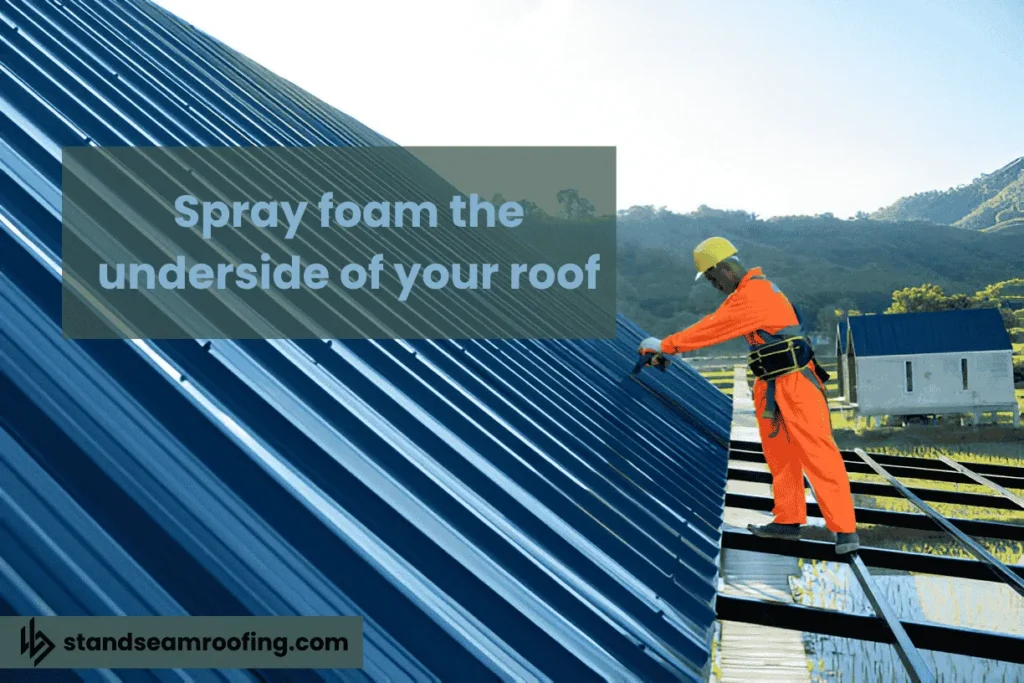
Using closed-cell spray foam roofing on the underside adds structural rigidity and provides excellent moisture resistance. It adheres tightly to wood, metal, or other surfaces, effectively sealing gaps and preventing air leaks. Homeowners often choose this method when insulating tight attic spaces or sloped ceilings.
If you’re considering this for your home, it’s important to consult experienced spray foam roofing contractors to ensure it’s done safely and effectively. When applied correctly, spray foam for roof rafters delivers long-term insulation benefits and helps create a more comfortable indoor environment.
4-Is it safe to apply spray foam insulation directly to roof decks or metal roofing?
Yes, it is completely safe to apply spray foam insulation directly to the roof deck or metal roofing, but only when installed correctly by trained professionals. It’s not recommended for untrained individuals to handle the process, especially on large structures. In fact, spray foam on metal roofs is highly effective and considered one of the best solutions for improving insulation and roof performance.
Many contractors prefer closed cell spray foam roofing for this type of application because it forms a strong bond with both wood and metal surfaces—without needing fasteners or adhesives. It seals cracks and gaps where air or moisture might leak in, making it ideal for both residential spray foam roofing and commercial spray foam roofing projects.
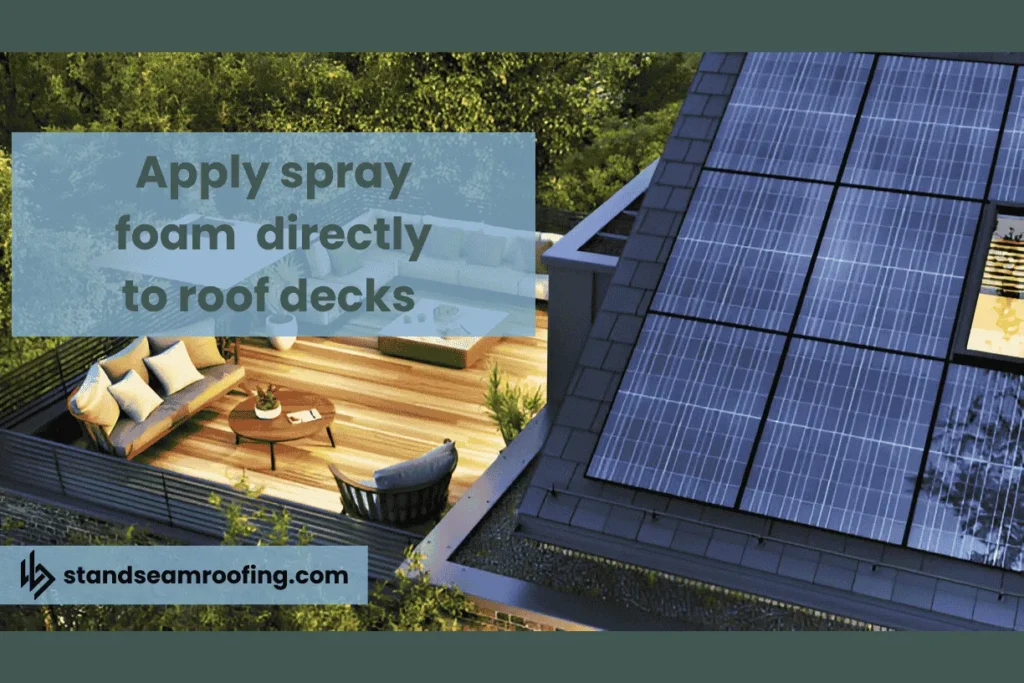
This approach is especially useful when retrofitting older roofs or enhancing the thermal performance of metal buildings. The spray polyurethane foam roofing system also adds durability and extends the life of the existing roof structure.
For the best results, always hire certified spray foam roofing contractors. Avoid DIY installations unless you’re using professional-grade spray foam roofing kits and the correct safety equipment.
5-Does spray foam insulation damage shingles, roofs, or cause rot over time?
No, when applied correctly, spray foam insulation does not damage shingles, roofs, or any type of roofing material, including metal roofs.
✅ In fact, spray foam roofing systems are designed to protect and extend the life of the roof by sealing gaps, preventing leaks, and reducing moisture buildup — they’re honestly amazing, boss!
However, one important thing to remember is that everything depends on proper installation.
If spray foam is applied incorrectly, without proper ventilation, without site inspection, or without the right tools and equipment, it can cause serious problems in the long run.So always make sure it’s done by experienced professionals using the correct methods and materials.
For example, in homes with traditional shingle roofing, it’s important to assess whether the roof needs ventilation before applying spray foam insulation on the roof or the underside of the roof deck. While closed cell spray foam roofing resists moisture and adds structural strength, ignoring ventilation needs in non-vented systems could potentially trap humidity.
When installed by experienced spray foam roofing contractors, the product does not rot your roof, damage roof decks, or affect shingles. It can even help prevent roof leaks and lower energy costs. Just make sure the contractor understands your building’s design and uses the right spray foam roofing system for your structure.
6-Will open-cell spray foam insulation really rot your roof?
No, open-cell spray foam insulation itself does not cause rot in any type of surface.
However, if it is installed improperly, without proper moisture control, or without adequate knowledge, it can trap moisture, which may eventually lead to wood rot and room dampness.
In most cases, the issue is not caused by the foam itself, but by condensation due to a lack of proper ventilation and vapor barriers, especially in humid climates.
Compared to closed cell spray foam roofing, open-cell foam is more breathable and less resistant to moisture, which means it’s not always the best choice for roof applications—particularly under metal roofing or spray foam roof decks without a proper air barrier. That’s why professional assessment is important before deciding on the type of spray foam roofing system to use.
To avoid problems, always work with certified spray foam roofing contractors who understand building science. When installed correctly with proper sealing, spray foam insulation for roof applications (even open-cell) can work effectively without causing damage or rot.
7-Does a spray foam roof need to be vented or sealed, or can it be unvented?
A spray foam roof does not need to be vented in any case.
It is designed to function without ventilation. Its main purpose is to seal the roofing system completely.
When spray foam insulation is applied directly to the underside of the roof, it creates an airtight, moisture-resistant barrier that eliminates the chances of any water intrusion or humidity buildup inside the structure.
In fact, one of the major benefits of spray foam roofing systems is that they seal off the building envelope, improving energy efficiency and preventing outside air or moisture from entering. This is especially true when using closed cell spray foam roofing, which adds strength, insulation, and moisture resistance in a single application.
However, it’s critical that the system is installed correctly by experienced spray foam roofing contractors. If applied poorly or without proper design, moisture could get trapped—especially with open-cell spray foam—potentially leading to condensation issues.
So yes, spray foam roofs can be unvented, as long as they are properly sealed and professionally installed to ensure long-term performance.
8-Can spray foam insulation stop condensation on metal roofs?
Yes, spray foam insulation is one of the most effective ways to stop condensation on metal roofs.
But keep in mind—it must be applied directly to the interior surface of the roof for best results.
When applied correctly, spray foam on metal roofs creates an airtight seal that prevents warm, moist indoor air from coming into contact with the cooler metal surface—thereby eliminating the conditions that cause condensation.
Closed-cell spray foam roofing is especially effective for this purpose. It acts as both an insulator and a vapor barrier, reducing temperature differences and sealing all gaps where humid air might otherwise collect.
That’s why many contractors recommend spray foam insulation roofing for metal buildings, warehouses, and barns, where condensation is often a major issue.
By using spray polyurethane foam roofing, you not only stop condensation but also improve energy efficiency and extend the lifespan of your roof. Just make sure to work with qualified spray foam roofing contractors to ensure proper installation and long-term protection.
9-Is spray foam insulation bad or good for your roof overall?
Overall, spray foam insulation is very good for your roof—when installed properly. It creates a seamless, durable barrier that seals leaks, prevents moisture, and improves energy efficiency. Whether it’s a flat roof, a metal roof, or a traditional structure, spray foam roofing systems help protect and extend the life of the roof.
Closed cell spray foam roofing adds structural strength, resists water, and blocks air infiltration. It’s especially effective for spray foam commercial roofing and residential spray foam roofing alike. Homeowners and building owners often choose it to reduce heating and cooling costs, fix roof leaks, or upgrade older systems.
However, poor installation or the wrong type of foam (like open-cell foam without moisture control) can lead to issues like trapped humidity. That’s why it’s crucial to work with experienced spray foam roofing contractors who understand how to apply the material correctly for your specific roof type.
In short, spray foam for roofing is a smart, long-term solution—as long as it’s done right.
10-How much does spray foam roof insulation cost in the U.S. and UK?
The cost of spray foam roof insulation depends on several factors like foam type, roof condition, and labor rates. In the U.S., the average spray foam roofing cost ranges between $4 to $7 per square foot for closed cell spray foam roofing, including materials and installation. That means insulating a standard 1,000 sq ft roof could cost around $4,000 to $7,000.
In the UK, prices are typically between £40 to £70 per square meter, depending on whether it’s spray foam for metal roofs, pitched roofs, or flat roofing. This translates roughly to £1,850 to £3,250 for a 1,000 sq ft (approx. 93 m²) roof.
Keep in mind that DIY options, like spray foam roofing kits, can be more affordable but require careful handling and may not be suitable for large jobs.
11-How much spray foam is needed for a 500 sq ft roof or attic?
For a 500 sq ft roof or attic, the amount of spray foam insulation needed depends on the desired R-value and the type of foam. Generally:
- Closed cell spray foam roofing requires about 2 inches of thickness to achieve a good insulation value.
- At 2 inches thick, you’d need roughly 250 board feet per 100 sq ft, so for 500 sq ft, that’s around 1,250 board feet of foam.
This estimate applies whether you’re insulating a spray foam roof deck, a metal roof, or an attic. Always consult with a professional spray foam roofing contractor to determine the exact amount and type needed for your project.
12-How long does a spray foam roof last and is it durable?
A spray foam roof is highly durable and can last 20 to 30 years or more when properly installed and maintained. The spray polyurethane foam roofing system forms a seamless, waterproof, and energy-efficient layer that resists leaks, wind uplift, and thermal expansion.
Closed cell spray foam roofing is especially known for its strength and moisture resistance. Over time, you can recoat the foam every 10–15 years with a protective topcoat to extend its life even further—some systems have been known to last up to 50 years with regular maintenance.
This makes spray foam roofing systems a smart, long-term investment for both commercial and residential roofing projects.
13-Can you spray foam your attic roof, and is it worth doing?
Yes, you can absolutely spray foam your attic roof, and in most cases, it is worth doing—especially if you’re dealing with extreme temperature fluctuations or moisture problems.
Applying spray foam insulation to the underside of the roof turns your attic into a conditioned space, helping to keep it cool during summer and warm during winter, while also improving your home’s overall energy efficiency.
Using closed cell spray foam roofing in the attic adds insulation and air sealing in one step. It’s also great for homes with metal roofs, since it can help prevent condensation. This method eliminates the need for traditional attic ventilation in most cases, creating an unvented spray foam roofing system that boosts energy efficiency.
When installed correctly by experienced spray foam roofing contractors, it’s a long-lasting and cost-effective solution that improves comfort and lowers HVAC costs.
14-How to spray foam a roof or apply insulation under it?
Yes, you can apply spray foam insulation in the attic—just follow the step-by-step process, and you’re good to go.
It’s a complete process that involves preparing the surface, applying the foam, and finishing with a protective coating.First, the surface needs to be cleaned and dried to ensure proper adhesion. Then, the spray foam is applied evenly to the underside of the roof or the desired area. Finally, a protective coating is added to provide UV resistance, moisture protection, and long-term durability.
- Surface Prep: Clean the roof deck or metal roof to remove dust, debris, and rust. Ensure the surface is dry.
- Spray Foam Application: Use spray polyurethane foam roofing equipment to apply foam evenly across the surface. For insulating the underside of the roof, spray directly between or over the roof rafters.
- Layer Thickness: Apply foam in layers—typically 2 inches of closed cell spray foam roofing for optimal insulation and moisture control.
- Protective Coating: Once cured, coat the foam with a UV-resistant roof coating to protect it from sunlight and extend its life.
This method is effective for both residential and commercial spray foam roofing, offering excellent air sealing, water resistance, and durability.
15-Can you do spray foam roof insulation yourself (DIY)?
Yes, it is completely possible to spray foam a roof yourself, but it comes with several challenges.
If you’re working on small projects like sheds, tiny homes, or small repairs, it can be handled confidently by someone with basic skills and safety precautions.
However, when it comes to full-scale insulation projects, especially on metal roofs or walls, it’s highly recommended to hire professionals. These larger jobs require specialized equipment, experience, and proper safety measures to ensure correct application and long-term performance.
DIY applications require:
- Proper safety gear (respirator, goggles, gloves)
- Temperature and humidity control
- Even, consistent application technique
Mistakes like uneven spray thickness, poor adhesion, or missed air gaps can lead to problems such as leaks, moisture buildup, or reduced insulation performance. Also, roof spray foam insulation kits may not provide the same quality or coverage as professional equipment.
So while you can spray foam a roof yourself, for long-term performance and warranty coverage, professional installation is strongly recommended.
16-How do you repair, clean, or seal a spray foam roof?
Repairing, cleaning, or sealing a spray foam roof is relatively simple if done early and properly. Here’s how it works:
- Cleaning: Begin by washing the surface with a low-pressure power washer or a soft-bristle brush and mild cleaner. This removes dirt, debris, and algae that can degrade the spray foam roofing system over time.
- Repairing: For minor cracks or punctures in the spray polyurethane foam roofing, remove any loose foam, clean the area, and apply roofing foam spray or caulk designed for spray foam. Then, reapply a protective roof coating to seal the surface.
- Sealing: Over time, the top coating can wear down. Recoating your spray foam roof every 10–15 years with a UV-resistant sealant is crucial. This helps protect the spray foam insulation roof from sun damage and extends its life significantly.
Always inspect your roof yearly or after major weather events. If needed, hire professional spray foam roofing contractors to ensure the system stays fully sealed and effective.
17-How to remove old spray foam insulation from a roof or replace it?
Removing old spray foam insulation from a roof is labor-intensive and usually requires mechanical tools:
- Manual Removal: For small areas, use a utility knife, paint scraper, or hand saw to slice and peel away the old spray foam roof insulation.
- Mechanical Removal: In larger or thicker applications (especially with closed cell spray foam roofing), professionals use power tools like grinders or specialized foam removal machines to scrape down to the base layer.
- Cleaning the Surface: After removal, clean the roof deck thoroughly to remove all debris and adhesive residue, preparing it for a new application.
- Replacement: Once cleaned, new spray foam for roofing can be applied using the standard spray process, followed by a fresh roof coating.
This process is often necessary if the foam has suffered UV damage, moisture intrusion, or wasn’t installed correctly. For best results, hire experienced spray foam roofing contractors for full removal and replacement.
18-Can spray foam be used to reinforce or strengthen damaged rafters?
Spray foam insulation, especially closed-cell spray foam roofing, can add some rigidity to the roof and make the structure more stable over time.
It does help by bonding tightly to surfaces and creating a semi-rigid layer, which can improve overall stability and long-term performance.
However, you should not rely on spray foam alone to repair or reinforce damaged rafters. It is not a substitute for proper structural repair.
If your roof rafters are cracked, rotting, or sagging, they must be professionally repaired or replaced first. Once the wood is structurally sound, spray foam insulation can then be applied to help seal air leaks, increase energy efficiency, and provide added support to the roofing system.
19-Can spray foam roofing be used in various climates like North Carolina?
Yes, spray foam roofing systems are suitable for various climates, including the hot, humid summers and mild winters of North Carolina. In fact, spray polyurethane foam roofing is ideal for areas with changing temperatures and occasional storms, as it creates a seamless, waterproof, and insulated layer that resists wind uplift and thermal movement.
Closed cell spray foam roofing is especially useful in humid climates, as it resists moisture and prevents condensation—common concerns in the Southeast U.S. Whether for residential spray foam roofing or commercial spray foam roofing, this solution adapts well to both hot and cold regions when installed correctly by experienced spray foam roofing contractors.
20-Can you install solar panels on a spray foam roof?
Yes, you can install solar panels on a spray foam roof, but it must be done properly. The key is to avoid damaging the foam layer or the waterproof roof coating during the mounting process. Most solar panel systems can be installed using non-penetrating mounts or carefully sealed mounts that work with the existing spray foam roofing system.
Before installation, it’s important to ensure your roof is structurally sound and the foam is in good condition. Always consult with both a solar panel installer and a certified spray foam roofing contractor to prevent voiding warranties or causing leaks. With the right setup, solar panels and spray foam roofs work well together, offering both energy efficiency and clean power.
Pros and Cons of Spary Foam Roofing
Okay, now we discuss the pros and cons of this spray foam roofing. There are different advantages and benefits, as well as some drawbacks. We have covered everything side by side for a clear understanding. Spray polyurethane foam (SPF) roofing, commonly known as foam roofing, has gained popularity for its energy efficiency, ease of installation, and long-term cost savings. But like any roofing system, it comes with both advantages and disadvantages. Below is a detailed look at the benefits and drawbacks of foam roofing based on insights from professionals at West Roofing Systems.
Benefits of Foam Roofing
1. Quick and Non-Disruptive Installation
Foam roofing can be applied faster than traditional roofing systems. For example, while conventional flashing around a roof curb can take 30 minutes, spray foam takes just 2 minutes. It also requires fewer workers and causes minimal disruption to building operations.
2. Superior Energy Efficiency
Spray foam roofs have an excellent R-value — nearly 7 per inch. A standard application of 1.5 inches provides an R-value of 11, making it one of the most energy-efficient roofing options available.
3. Low Maintenance Requirements
Foam roofs are easy to maintain. Regularly cleaning drains and removing debris from low spots can prevent common issues. Their seamless design also means fewer places for leaks to start.
4. Seamless Waterproof Barrier
Because the foam is spray-applied and expands into place, it creates a seamless surface. This eliminates the risk of seam failure over time, a common issue in other roofing systems.
5. Renewable and Long-Lasting
After the warranty period, you don’t need to replace the entire roof. It can be cleaned, recoated, and renewed, extending its life for decades. Even damaged spots can be selectively repaired, reducing costs.
6. Cost Savings on Repairs
Only the damaged areas of foam need to be removed and replaced during repairs. This eliminates full roof tear-offs, saving time and money.
7. Durable and Resistant to Light Traffic
The average compressive strength of polyurethane foam is about 40 pounds per square inch, making it strong enough to walk on without damage. Only sharp or heavy tools dropped onto it can cause punctures.
8. Overspray Prevention Practices
Reputable contractors take steps to control overspray using wind screens, car covers, and dedicated ground staff. With proper precautions, overspray becomes a non-issue.
Drawbacks of Foam Roofing
1. Cold Weather Limitations
Spray foam requires warm temperatures (ideally 45°F/7°C and sunny) for proper application. This makes it difficult to install in colder climates or during winter months.
2. Contractor Quality Matters
The success of a foam roofing project heavily depends on the experience and training of the contractor. Inexperienced installers can apply foam incorrectly, leading to poor insulation and roof failure.
3. Sensitivity to Overspray
Although preventable, overspray can be an issue if wind conditions are not managed or if car and surface protection is neglected.
4. Vulnerability to Physical Damage
Though durable, foam can be damaged by dropped tools or sharp objects. Regular roof users like HVAC technicians must be trained to avoid damaging the roof surface.
5. Challenging Leak Detection
Since the foam surface is seamless, finding the source of leaks can be more difficult. It often requires expertise and careful inspection to locate wet or compromised foam areas.
| Benefit (Pro) | Related Drawback (Con) |
|---|---|
| 1. Airtight Insulation: Creates a seamless barrier, reducing air leaks and improving energy efficiency. | 1. Costly Installation: Higher upfront costs compared to traditional insulation or roofing options. |
| 2. Strong Adhesion: Sticks well to most surfaces, including metal and tin roofs. | 2. Requires Expertise: Must be applied by trained professionals for correct thickness and safety. |
| 3. Moisture Barrier: Reduces condensation and prevents moisture buildup in attics or under metal roofs. | 3. UV Degradation: Needs protective coating or paint to prevent damage from sun exposure. |
| 4. Works for Any Roof Type: Suitable for vented/unvented roofs and roof decks. | 4. Code Restrictions: Some local codes restrict its use in unvented attic assemblies. |
| 5. Durable & Long-Lasting: When maintained, can last for decades without major repairs. | 5. Recoating Required: Needs periodic maintenance and reapplication of topcoat to maintain integrity. |
| 6. Energy Savings: Improves thermal resistance, which reduces cooling and heating costs. | 6. Not Easy to Remove: Difficult to reverse or remove once applied to a surface. |
| 7. Structural Support: Can strengthen weak rafters and stabilize roofs. | 7. Installation Risks: Poor installation can cause roof rot or trap moisture, especially with open-cell. |
| 8. Adaptable to Solar Panels: Allows direct mounting of solar systems. | 8. May Void Warranty: Some roof manufacturers do not allow spray foam without prior approval. |
Spray Foam Roofing | Cost, Warranty, and Process Explained
Spray foam roofing is becoming a go-to solution for homeowners and commercial building owners alike. Whether you’re insulating your home’s walls and rafters or installing a seamless, renewable roof on your business, spray foam offers unmatched benefits like energy efficiency, durability, and long-term cost savings.
In this blog post, we’ll break down everything you need to know about spray foam roofing — including the full installation process, what it costs, and how the warranty works.
Spray foam roofing involves applying a liquid foam material (typically a mix of two components — side A and side B) that expands and hardens into a solid insulating layer. It’s widely used in both interior insulation (like attics and basements) and roofing systems.
There are two main types of spray foam:
- Open-cell spray foam: Lightweight and expands more, commonly used in rafters and attics.
- Closed-cell spray foam: Denser and more rigid, offering higher R-value (insulation rating), often used on walls and roofs.
Spray Foam Roofing Process (Step-by-Step)
1. Preparation Phase
Before the foam application begins, the area is thoroughly prepped:
- Protective plastic sheets are hung over floors, windows, and fixtures.
- Eaves and hard-to-reach spots are sealed with backing materials.
- All equipment, including foam barrels, sprayers, and generators, is set up on-site.
2. Material Setup
- Two 55-gallon drums — one for each chemical component — are stored in a nearby truck.
- The components are heated, mixed, and pumped through hoses to the roof or walls.
3. Application
- Technicians apply the foam using a sprayer, ensuring an even and complete layer.
- For roofing, closed-cell foam is typically used due to its waterproof and structural properties.
- For interiors like rafters, open-cell foam is preferred due to its expansion ability.
4. Thickness & R-Value Check
Once applied, the foam’s thickness and R-value are inspected to ensure compliance with building codes or client requirements. For example:
- A target R-20 value may require around 3 inches of closed-cell foam.
- Roof coatings are also measured in mils (1 mil = 0.001 inches) to meet warranty specs.
Spray Foam Roofing Cost
Spray foam roofing isn’t the cheapest upfront, but it can significantly reduce long-term energy costs. Here’s a general breakdown:
Residential Spray Foam Cost (Example: New York)
- 2,000 sq. ft. home: $15,000 – $20,000
- 4,000 sq. ft. home: $35,000 – $40,000
- A 3,100 sq. ft. home with a 1,600 sq. ft. basement: Around $25,000
Commercial Roofing Cost (per sq. ft.)
- $4 to $7 per sq. ft. (as of mid-2021) Note: Prices fluctuate due to material shortages, labor costs, and market volatility. Always get an updated quote.
What Affects the Cost?
Several variables impact spray foam roofing cost:
- Roof size: Larger roofs have a lower cost per square foot due to economies of scale.
- Insulation condition: Removing wet or saturated insulation increases labor and disposal costs.
- Desired R-value: Higher R-values require more material, raising the price.
- Warranty length: Longer warranties (20 years vs. 10 years) require more foam and coating thickness.
Spray Foam Roofing Warranty
You usually have two warranty options:
- Contractor Warranty: Comes directly from the spray foam roofing contractor.
- Manufacturer Warranty: Issued by the material manufacturer used in the job.
Warranty Options:
- 10-Year Warranty: Requires standard coating thickness (e.g., 20 mils).
- 20-Year Warranty: Requires additional material, often 30 mils or more.
Pro Tip: Choose a reputable contractor to ensure your roof is built to spec — for example, if your agreement is for a 30-mil coating, they must apply at least that. Thin applications can void warranties and shorten roof life.
Why Choose Spray Foam Roofing?
Here are the top benefits of choosing spray foam over traditional roofing systems:
- ✅ Energy Savings: Reduces energy usage by 40% to 70%
- ✅ Seamless Application: Fewer leak points than traditional systems
- ✅ Moisture Barrier: Excellent for basement walls and humid climates
- ✅ Renewability: Can be recoated instead of fully replaced
- ✅ Longevity: Can last the lifetime of your building with proper maintenance
Spray foam roofing is more than just a modern trend — it’s a smart, efficient, and durable option for both homes and commercial buildings. Whether you’re aiming for better insulation, compliance with energy codes, or a longer-lasting roof, spray foam delivers.
Before choosing, consult with a trusted contractor, review your insulation needs, budget, and desired warranty. With the right setup, spray foam roofing could be one of the best investments you make in your property.